Pooley Bridge:
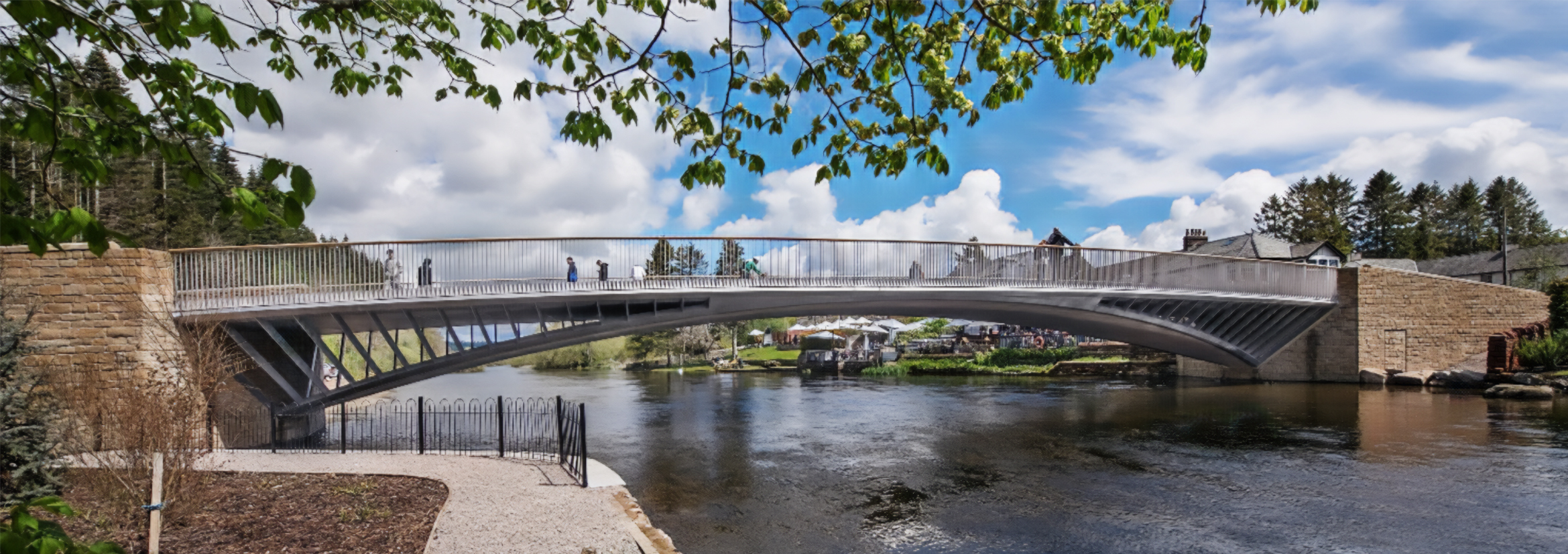
A Landmark of Stainless Steel and Collaborative Design
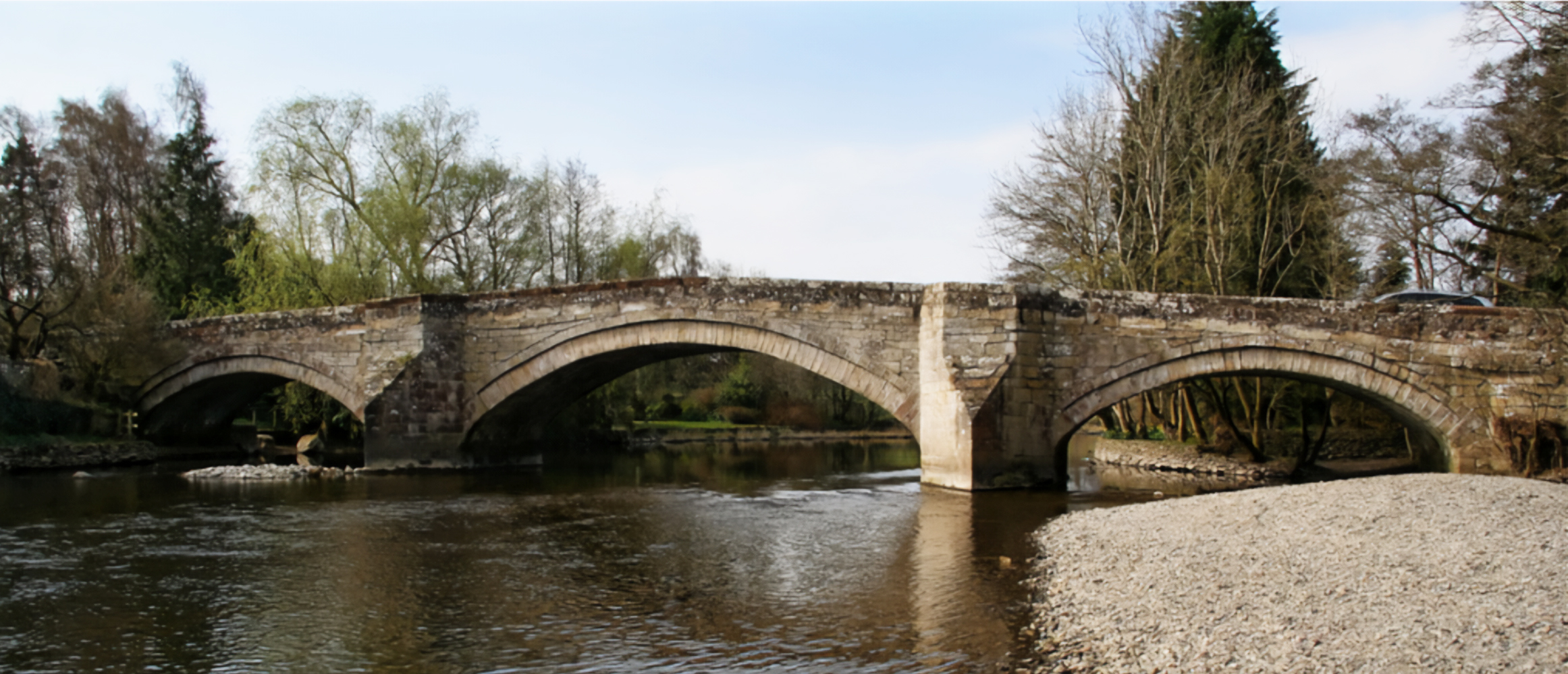 Historic Pooley bridge
Pooley Bridge village serves as the gateway to the Lake District National Park in England, a UNESCO-protected landscape. For over 250 years, a three-span stone bridge built in 1764 defined the village's identity until, in 2015, Cyclone Desmond caused its collapse due to pier scouring.
The loss was devastating: not only was physical connectivity severed—forcing 16 km detours—but the very symbol that gave the community its name vanished. The challenge for the firm Knight Architects was monumental: to design a replacement that would be respected by the locals, technically superior against future flooding, and harmonious with an environment of singular beauty.
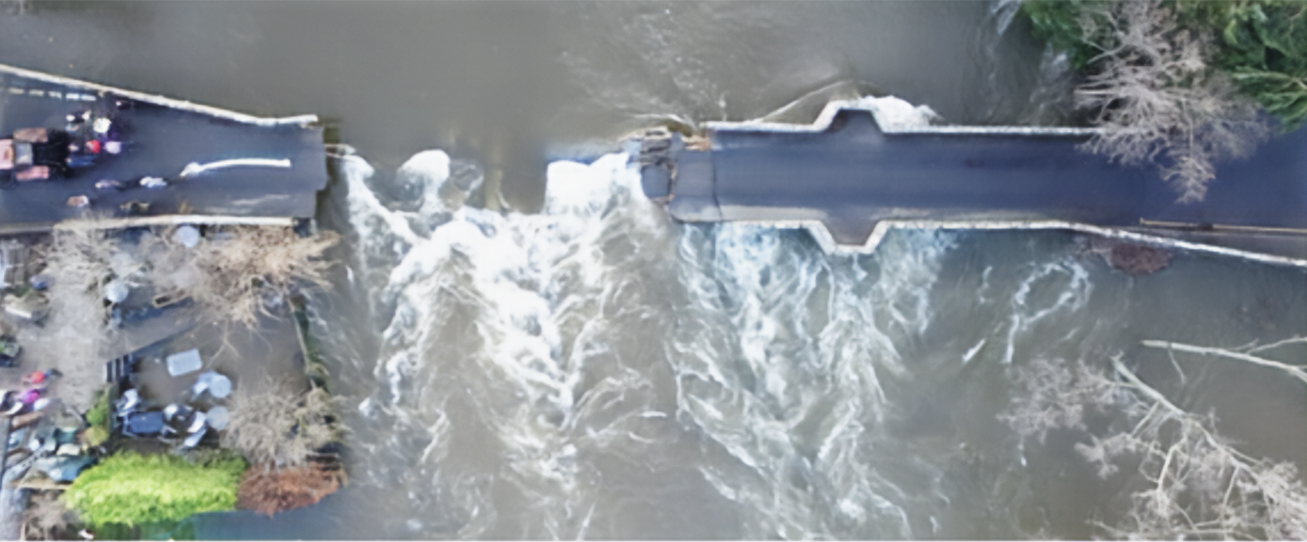
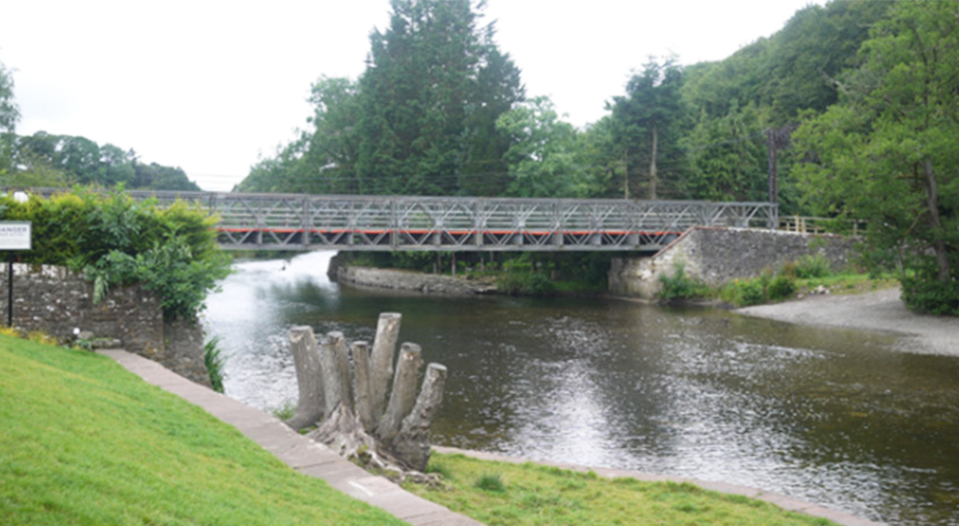
Left Image: Historic bridge destroyed by floods caused by Cyclone Desmond Right Image: Temporary bridge installed in 2016.
The Process: Designing with the Community
 Design mockup unveiled in the 3rd consultation session
What makes this project exceptional is its methodology. The team at Knight Architects, led by Héctor Beade Pereda as Design Director, implemented an unusually intense public participation process.
The goal was not simply to "show" a design, but to catalyze the aspirations, needs, and desires of the residents. After several sessions, common values were identified: elegance, transparency, lightness, and, above all, flood resilience. The result was a 40-meter-span deck-arch bridge that pays homage to the original arch typology but through a 21st-century architectural language.
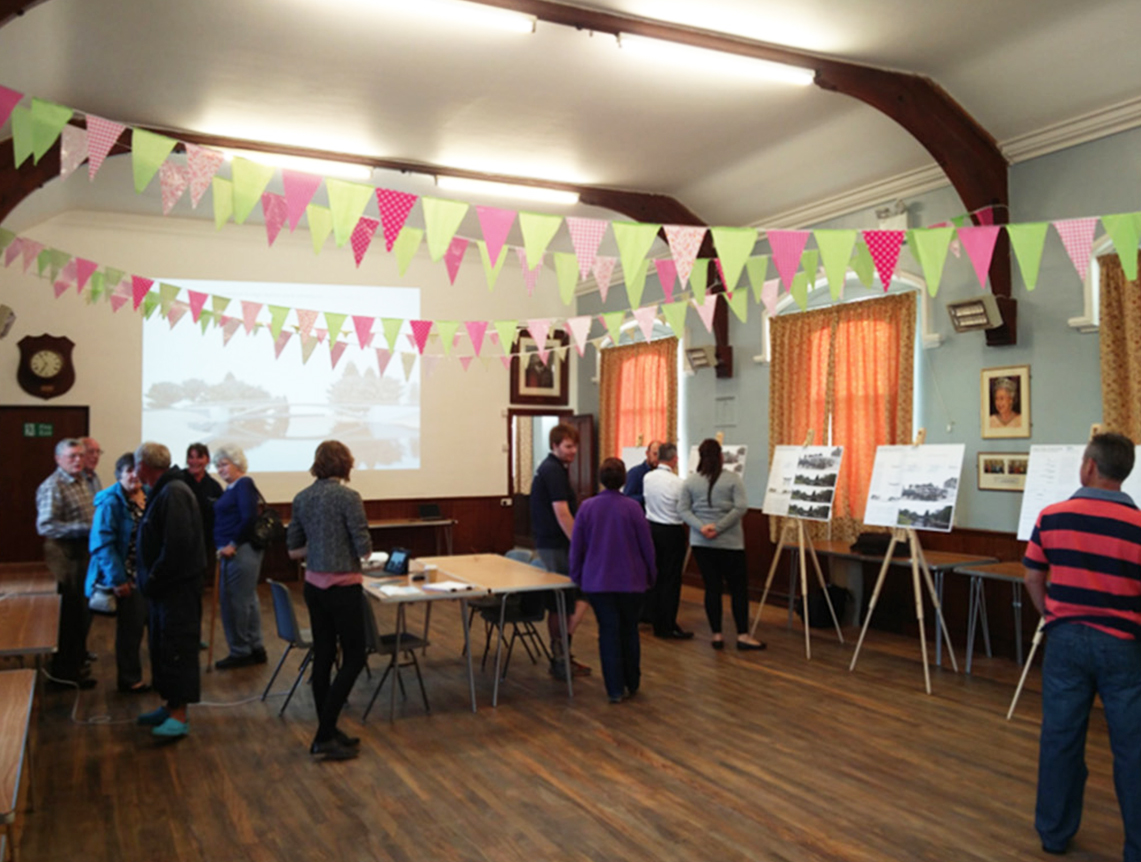
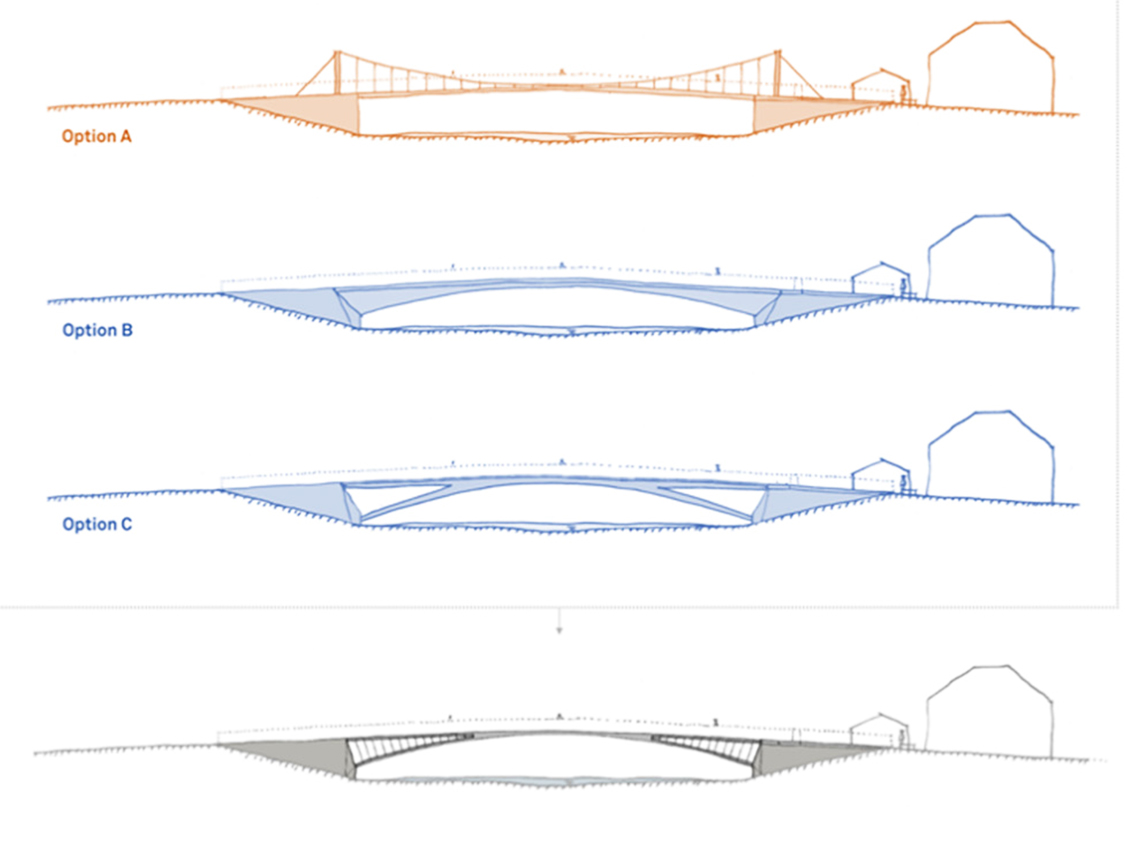
Left Image: 2nd community consultation session Right Image: Preliminary options presented at that session, with the subsequently developed design in gray, based on the received feedback.
The Structural Solution: An Arch that doesn't "push" the Ground
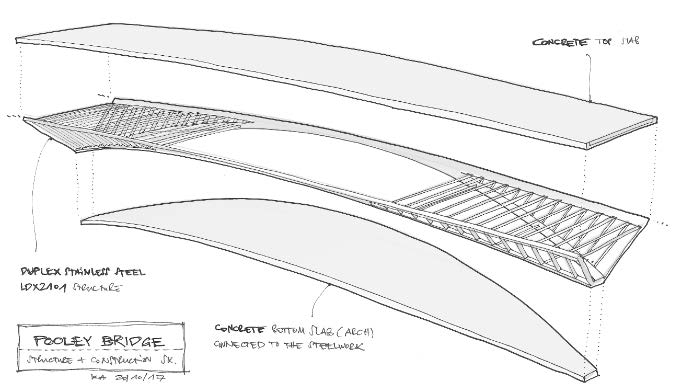
From a design standpoint, the bridge is a fascinating hybrid. Although it visually appears to be a pure single-span arch, structurally it functions as a tied-arch integrated with the deck.
This was a strategic decision due to the low bearing capacity of the ground. By connecting the arch to the deck through side spans hidden within the abutments, the system compensates for horizontal reactions. This eliminated the need for massive foundations or complex piling, allowing for an extremely slender and clean geometry.
Image: Preliminary sketch reflecting the composite structure of the main span.
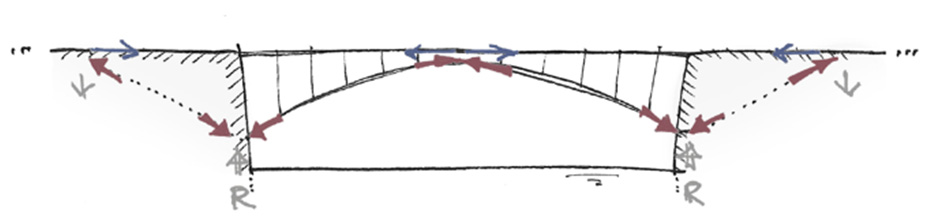
Image: Structural diagram showing the bridge's behavior as a tied-arch connected to the deck.
The Role of Stainless Steel
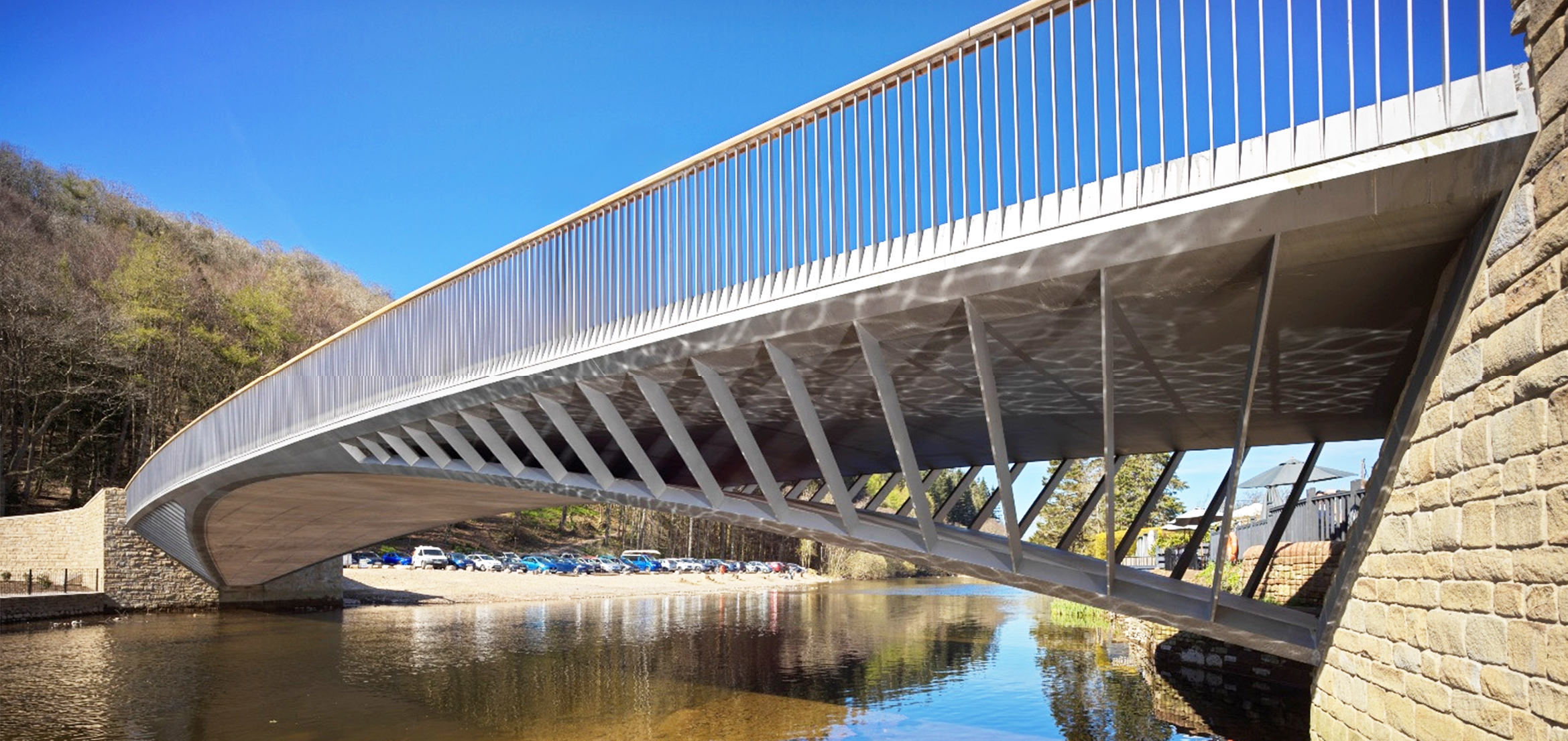
The success of Pooley Bridge lies in its materiality. It is the United Kingdom's first stainless steel road bridge. Its use was not arbitrary, but a direct response to the project's pillars: resilience and durability.
Structural and Aesthetic Function
- Material: Low-alloy duplex stainless steel (EN 1.4162 / LDX 2101) was used.
- Strength and Slenderness: This material possesses a structural capacity 25% higher than conventional steel, which allowed for reduced sections and a transparency that minimizes water flow obstruction during floods.
- Minimal Maintenance: Its excellent corrosion resistance guarantees an extended service life without the need for repainting or constant maintenance—vital in a World Heritage site.
The design employs the steel as a lightweight, self-supporting metallic exoskeleton linked to two high-strength concrete slabs via 1,920 shear connectors. This composite section allowed the metallic structure to act as a guide during construction, optimizing timelines within a work window strictly restricted by ecological constraints (salmon spawning).
The Finish
The steel underwent a grinding and bead-blasting process to achieve a matte, low-roughness finish. This technique not only blurs the welds but also prevents excessive glare, allowing the structure to subtly capture the chromatic nuances of the National Park.
Sustainability and Legacy
Even without it being an explicit tender requirement, Knight Architects integrated sustainability as a core pillar. The choice of stainless steel was strategic: its exceptional corrosion resistance ensures a long service life and minimizes maintenance cycles. By using a duplex alloy with mechanical properties superior to conventional steel, the team was able to reduce thicknesses and achieve a much lighter and more slender structure. Furthermore, the project's ecological commitment is solidified by using a material that incorporates more than 85% recycled content, drastically minimizing the bridge's carbon footprint.
The bridge has been received with pride by the community; 300 residents' names were even engraved into the sandstone pavers of the sidewalks. Ultimately, Pooley Bridge demonstrates that high-end engineering, when clad in stainless steel and designed with the user in mind, ceases to be a technical object and becomes a new symbol of identity.
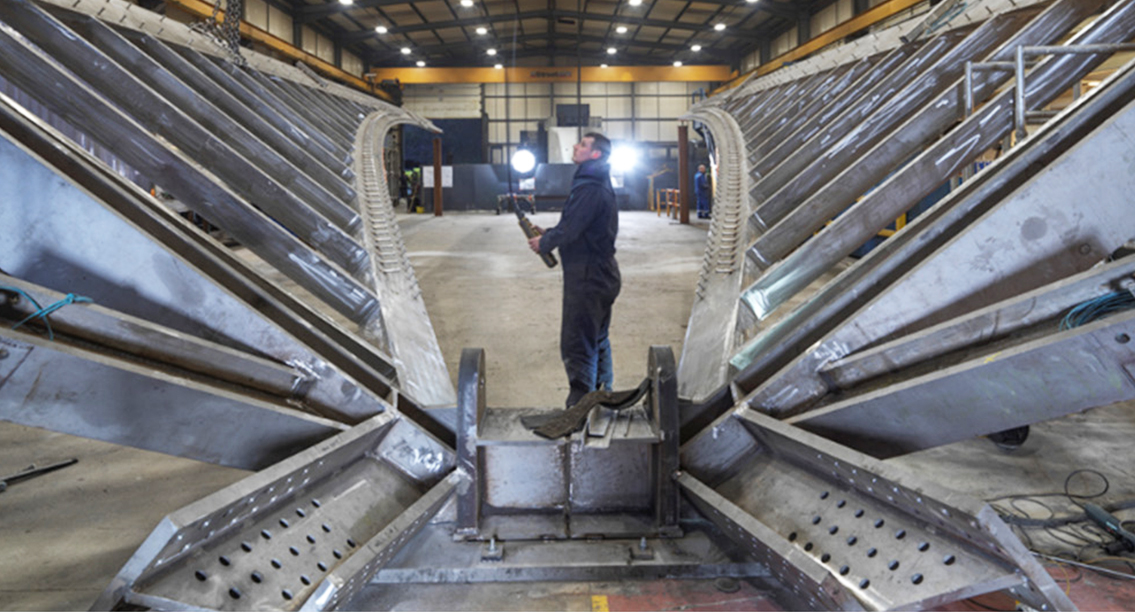
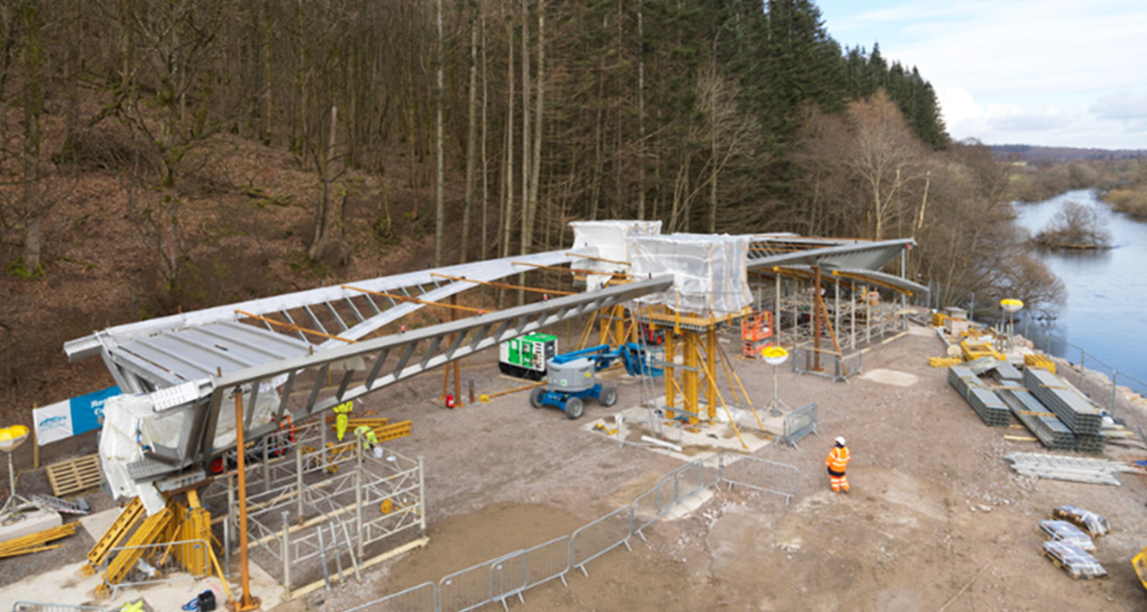
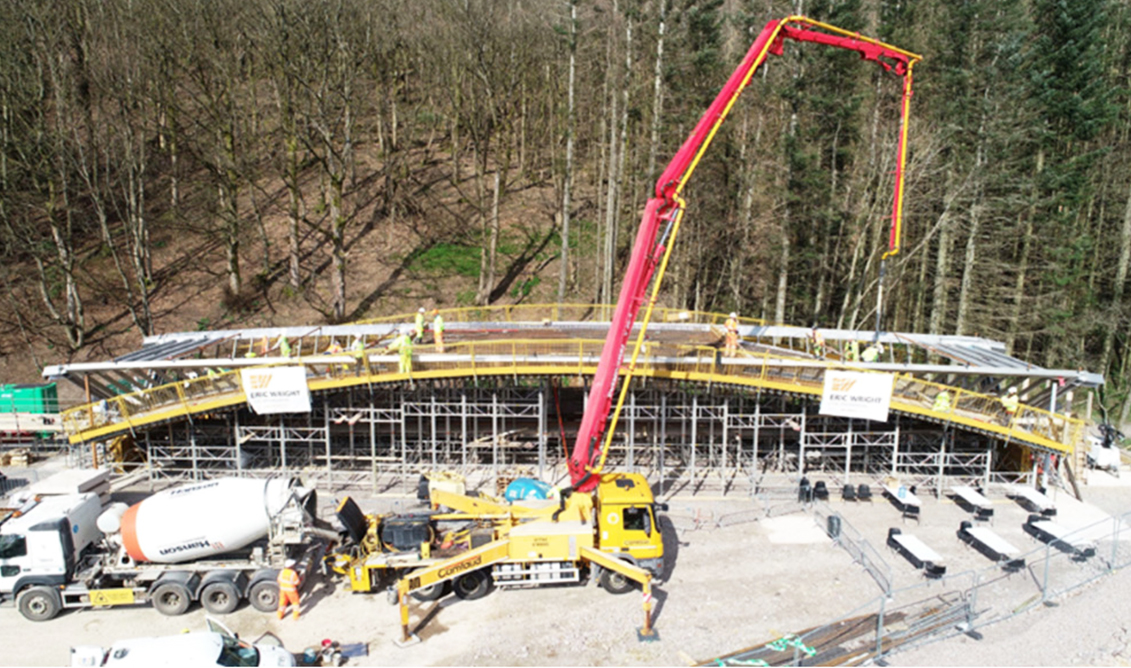
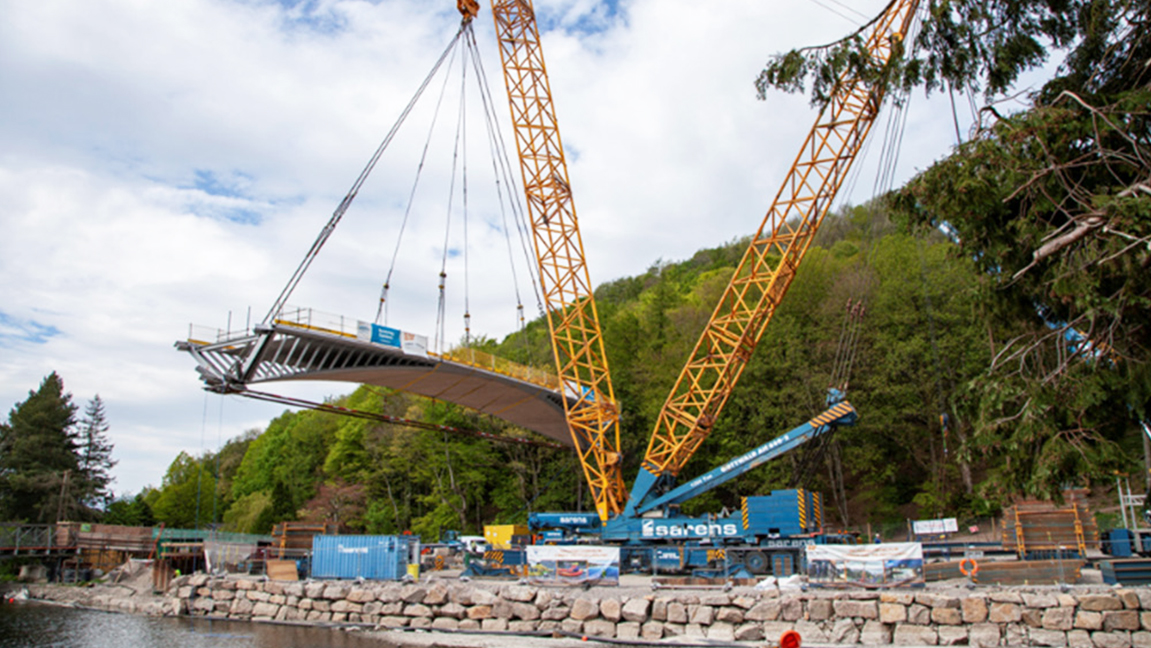
Images from left to right: Metallic structure fabrication in the workshop, on-site assembly, concrete pouring of the arch, and installation of the main span with a crane.
"Stainless steel was fundamental to Pooley Bridge from both an aesthetic and durability standpoint. The client understood not only that, but also the long-term economic savings it will provide, considering the maintenance costs over its entire service life." — Héctor Beade
