The Invisible Skeleton of the T-11
Download Pdf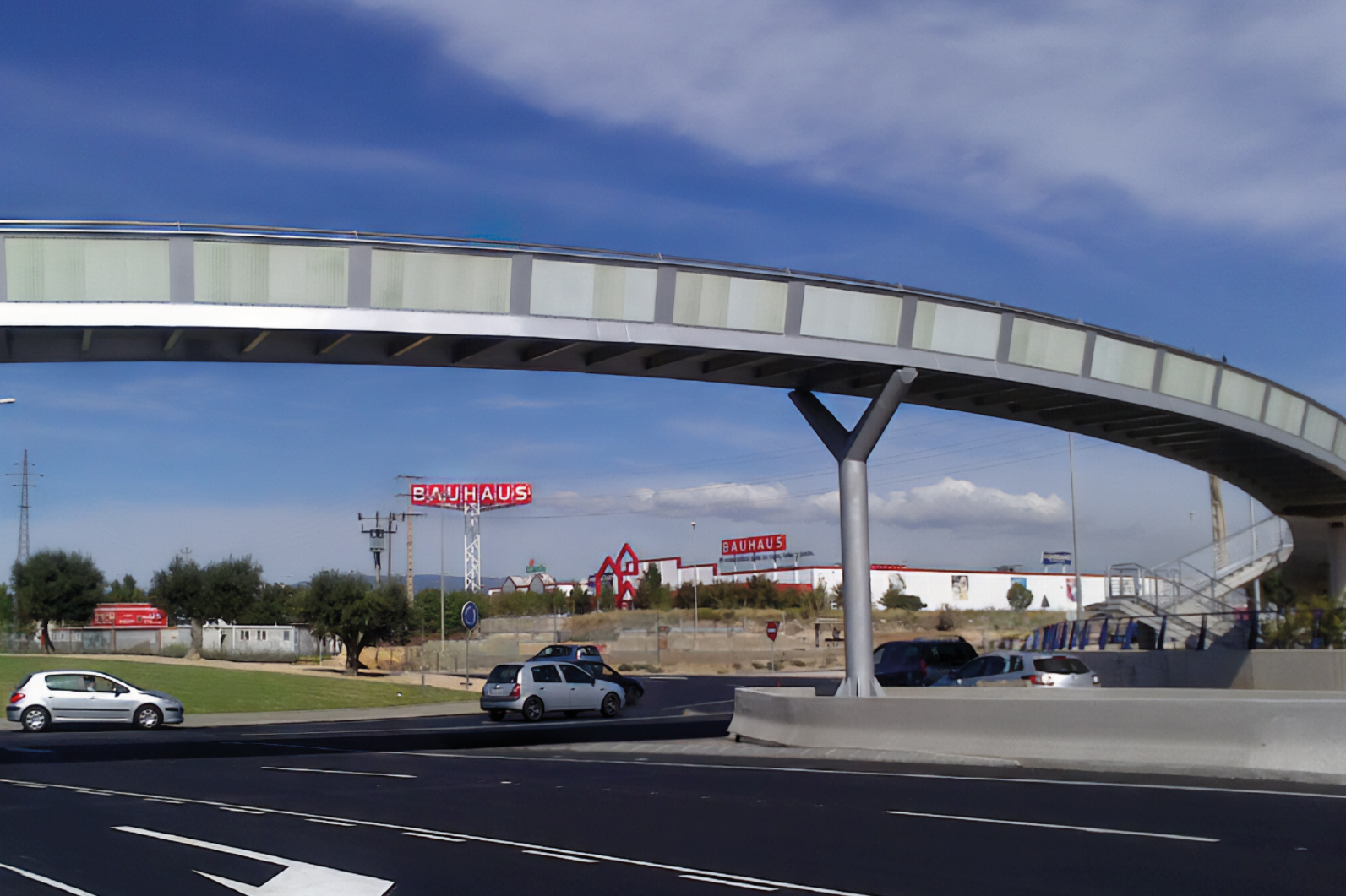
The T-11, the umbilical cord connecting Tarragona with the Reus airport, faced an identity crisis. With two lanes in each direction and a constant flow of vehicles, it aspired to meet the quality standards of a first-class highway. However, intersections with rural roads, private property accesses, and at-grade intersections hindered this goal. The need for a profound road improvement, combined with the fact that the existing pedestrian crossings became obsolete in terms of accessibility, required the construction of new pedestrian bridges.
The Challenge of Geometry
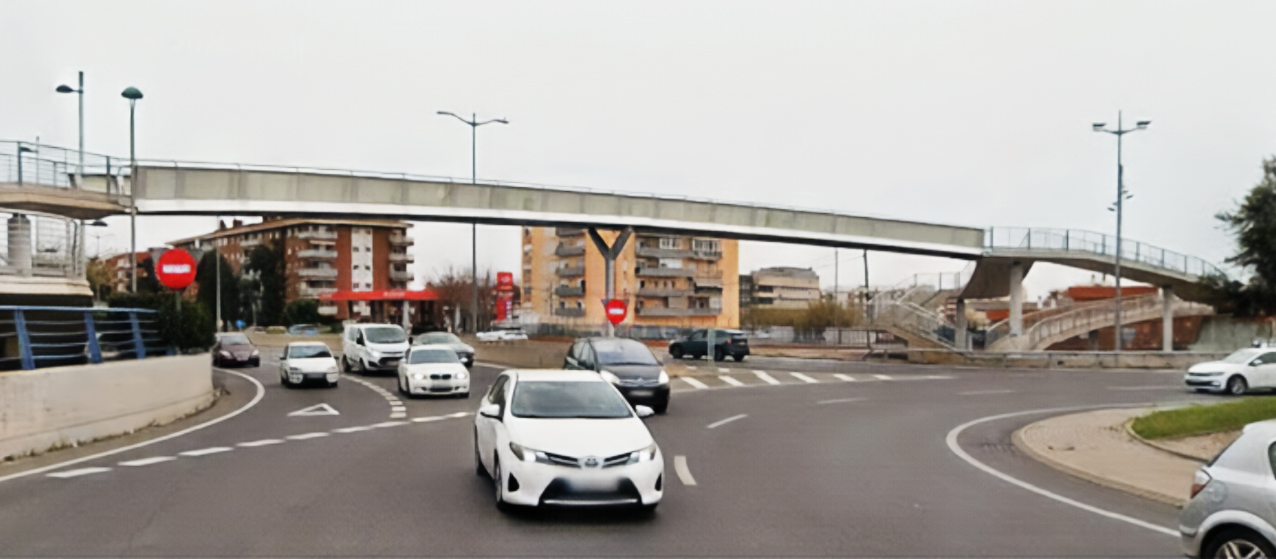
The first design challenge stemmed from the fact that the T-11 is not symmetrical; each location presented its own physical constraints, access ramps, and space limitations. Instead of replicating the exact same bridge, the engineering team defined a hybrid structural system made of stainless steel and Glass Fiber Reinforced Polymer (GFRP) to design each pedestrian bridge, adapting them to the specific requirements of each location. Consequently, the spans vary between 19.55 and 28.50 meters.
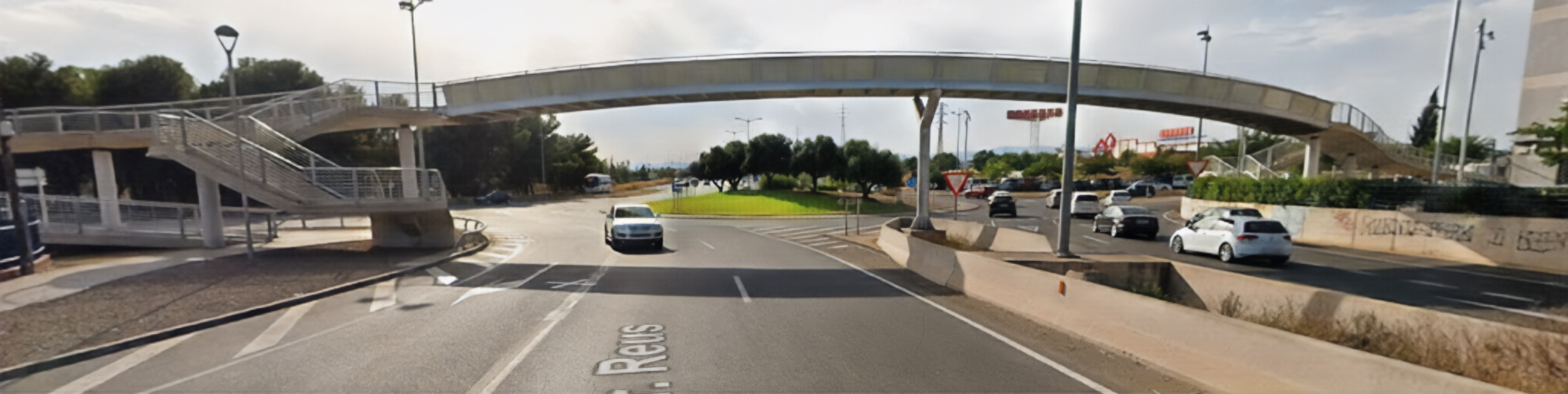
To maintain a coherent aesthetic identity throughout the entire section, a structural solution based on a steel Vierendeel truss was chosen. Unlike conventional trusses with diagonal bars, the Vierendeel truss utilizes a clean rectangular frame where the joints between the vertical posts and the horizontal chords are rigid. This reduces the visual impact of the structure and allows for better integration into the environment.
The efficiency of the pedestrian bridges lies in the choice of materials based on their properties:
- Load-bearing stainless steel structure: The lower support consists of box cross-sections, two lower chords, and two upper chords formed by plates of variable thickness, connected by vertical posts spaced at 2.20 meters.
- Lightweight GFRP deck: The lower chords are connected by transverse GFRP floor beams. On top of these transverse beams, GFRP panels with an anti-slip finish are used as the pedestrian deck, resulting in a very lightweight deck.
- Hybrid structural web: The openings of the Vierendeel truss are enclosed with translucent GFRP panels. These panels are connected to the chords, forming a continuous structural web.
Designing around a hybrid solution of stainless steel and GFRP contributes significantly to its sustainability:
- Weight reduction: Being much lighter structures, the piers and foundations required less concrete, reducing the overall carbon footprint of the project.
- Reduced maintenance: The use of stainless steel eliminates the painting or repainting processes over the years that would otherwise be necessary to protect against corrosion caused by the Mediterranean environment.
Finally, the design guarantees total accessibility through the incorporation of smooth-sloped ramps, eliminating any mobility barriers.
Modular Assembly and On-Site Erection
By leveraging prefabrication, disruption to T-11 traffic was successfully minimized. While the foundations, central piers, and access structures were being built on-site, the steelwork contractor assembled the hybrid structure at their workshop.
Each bridge was divided into two segments to facilitate transport to the site. Once the elastomeric bearings were placed on the piers, the first segment –which covered one whole span and 20% of the second one– was installed in its final position. The second segment was subsequently lifted, supported by the ramp on one end and connected to the cantilevered deck of the first segment on the other, with the aid of a temporary steel component. This method streamlined the erection process and drastically reduced traffic closure windows on the highway.
Information courtesy of Pedelta