Nickel is NOT responsible for making steel "stainless"
Download PdfThere is a classic and widespread myth in design and industry: directly associating nickel (Ni) with the ability of stainless steel to resist corrosion. And it is completely logical to think that if austenitic grades such as AISI 304 or 316 are the most corrosion-resistant, nickel must be directly responsible.
However, the metallurgical reality is slightly different and much more interesting.
The True Function of Nickel
Nickel is a highly strategic metal and an extraordinary ally, but its predominant influence does not lie in stopping the onset of rust. Its true function is to modify the internal microstructure of the material:
- Phase stabilizer: depending on the exact amount added, it is the determining factor in transforming the structure of a ferritic stainless steel into an austenitic or duplex grade.
- No effect on the onset of rust: it has no direct impact on resistance to corrosion initiation, which is the metric by which we actually judge the long-term integrity of any stainless steel.
So, if nickel only changes the microscopic structure, why are austenitic steels like AISI 304 or 316 more corrosion-resistant? The answer lies in a brilliant metallurgical synergy between nickel and chromium.
The Synergy Between Nickel and Chromium
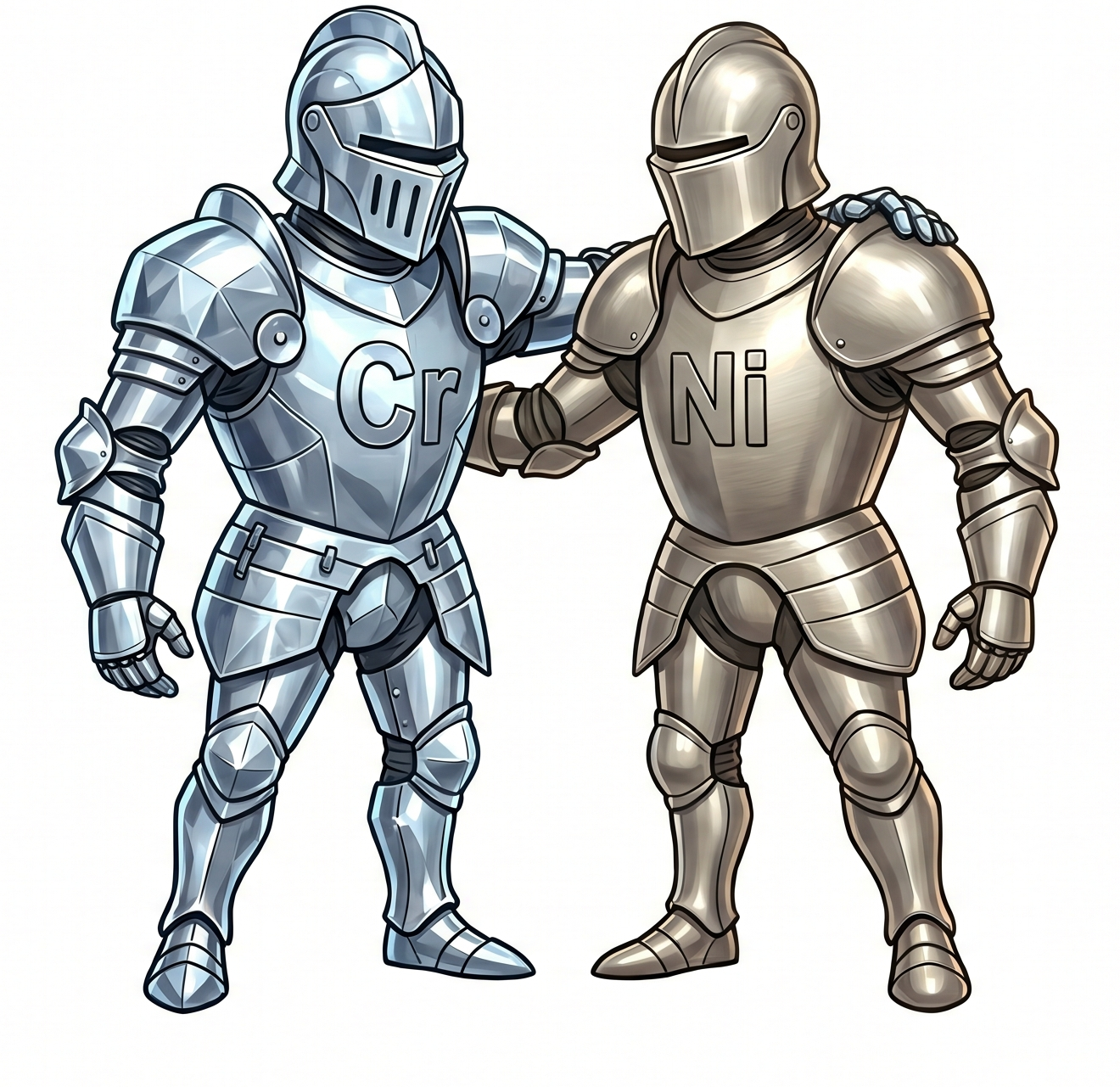
It is completely normal to think that nickel blocks corrosion because austenitic types perform better in corrosive environments. However, the phenomenon occurs in an indirect way:
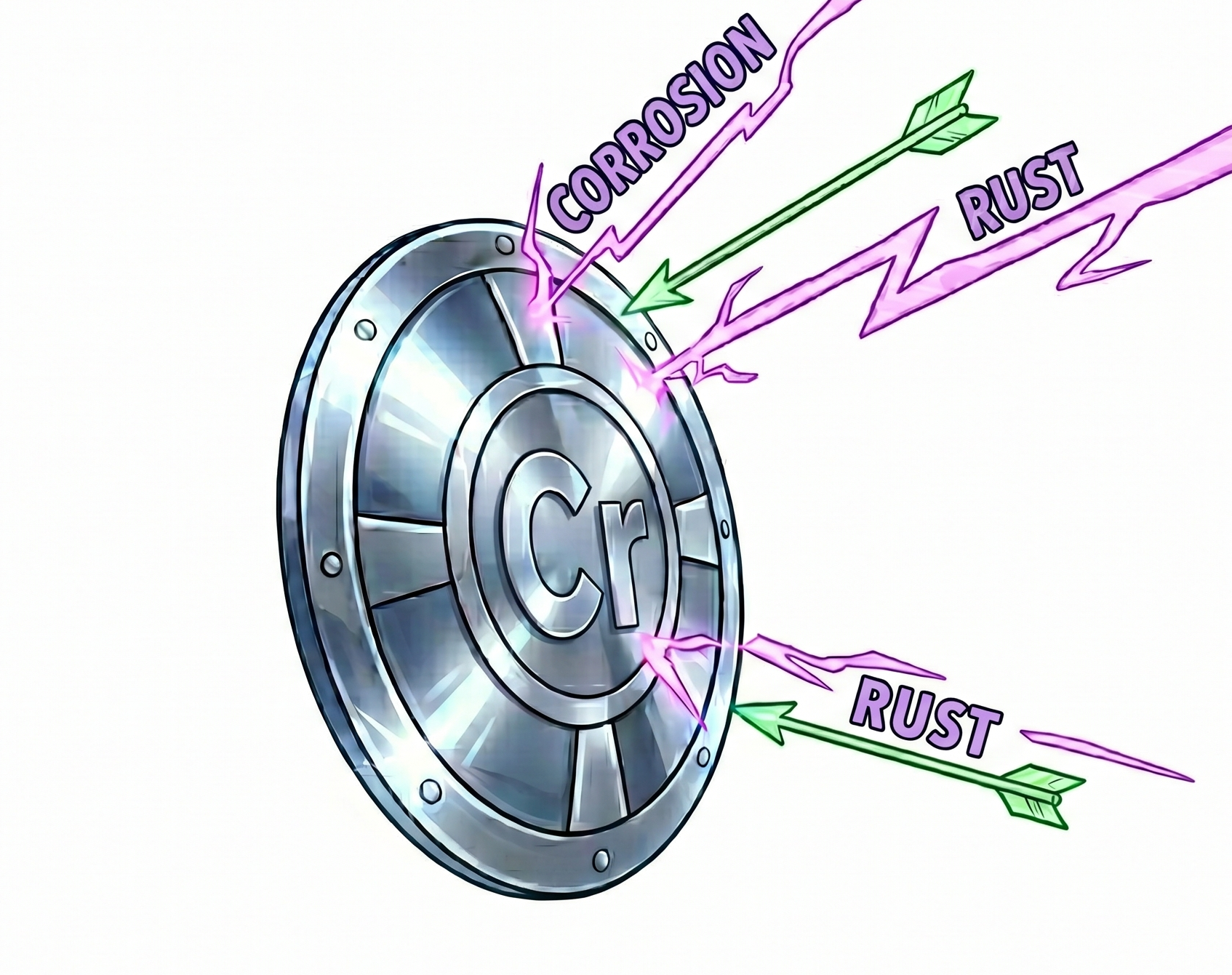
Chromium remains the only shield
For an alloy to defend itself, it strictly requires a minimum chromium content of 10.5%. This element reacts spontaneously with oxygen in the environment to create an invisible, nanometric film (the passive chromium oxide layer). This physical and electrochemical barrier is what truly stops the progression of corrosion into the interior of the metal. Without chromium, no matter how much nickel you add, the steel would rust.
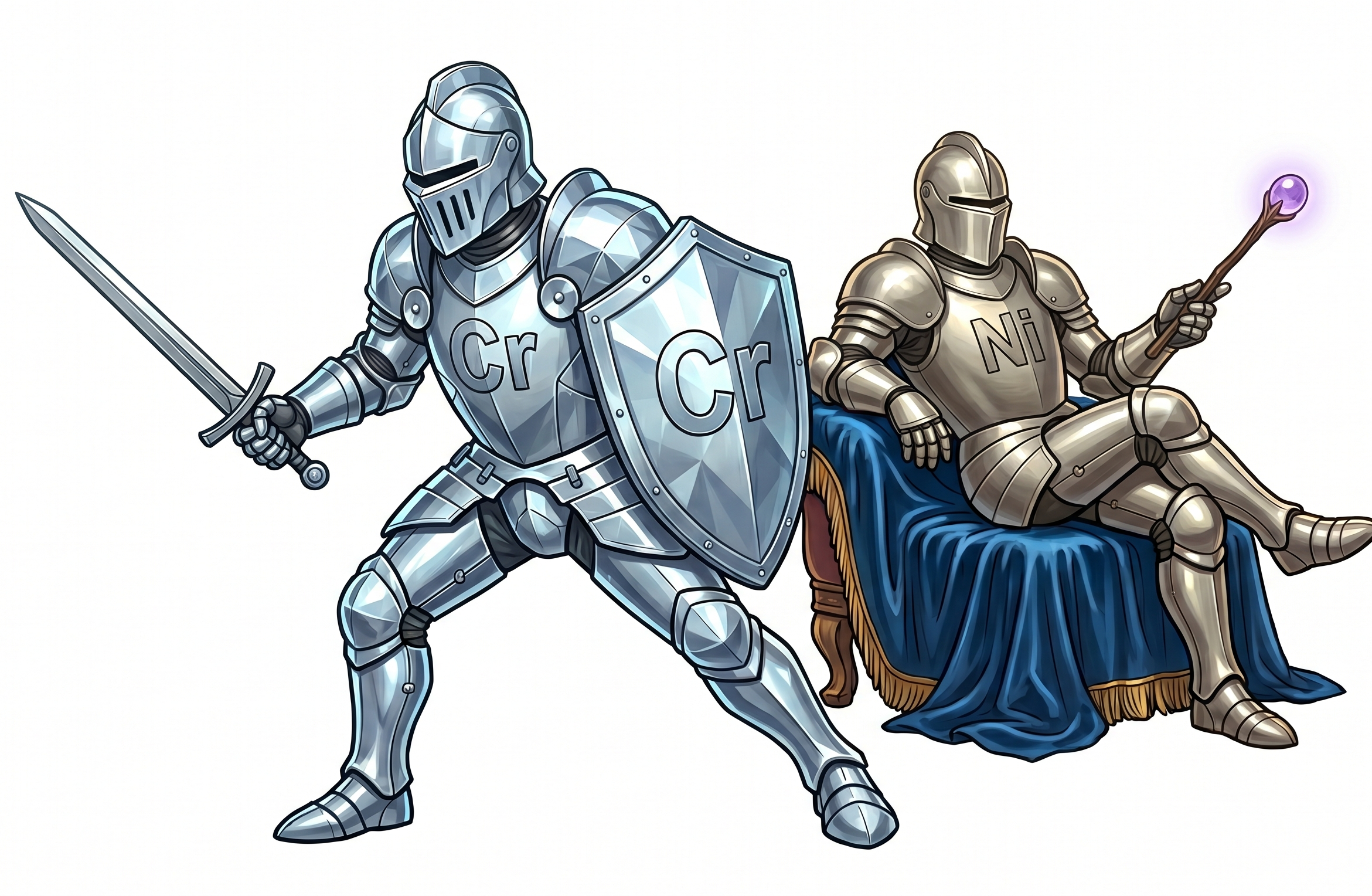
The "accommodation effect" of nickel (the key to austenitics)
This is where nickel performs its indirect magic. By transforming the internal structure into austenite, nickel modifies the atomic matrix of the steel, making it much more stable and increasing its solid solubility limit. This new austenitic structure allows it to dissolve and "accommodate" higher concentrations of chromium (18% in the case of 304) and add other elements such as molybdenum (in 316) without the steel forming phases that render it fragile or brittle under the various processing conditions to which the material may be subjected during manufacturing.

Defense in extreme acidic media
Chromium offers exceptional protection against corrosion and oxidation caused by water and the atmosphere, but its passive layer suffers significantly in highly acidic media where no oxygen is available. Nickel excels at providing crucial chemical resistance in reducing environments (such as sulfuric acid), defending the metal where chromium weakens.

Self-repair speed
If the steel surface suffers mechanical damage such as a scratch or a cut, nickel chemically helps to stabilize the zone so that chromium can react with oxygen again and regenerate the protective layer almost instantaneously.